
Pest Control
Not sure what you are dealing with? Start here. An inspection tells you what it is before anything is treated.
Learn morePest control services
View all servicesInsects
Rodents
Areas we cover
All areasNot listed?
We cover more than we have pages for.
Tell us the postcode and we will say straight away whether we can reach you.
Call 07886 109682London Pest Control
Flies indoors in numbers are not a coincidence. Something is breeding, or something is dead, and the species tells us which.
The problem
Fly is a broad word covering several very different problems, and the species determines everything that follows. House flies and blowflies breed on decaying organic matter. Fruit flies and drain flies breed in the film of organic residue inside drains, under equipment and in bar wells. Cluster flies do not breed indoors at all — they aggregate in lofts and roof voids to overwinter and reappear on warm days. Treating all of these the same way fails most of the time.
A sudden mass of large, sluggish blowflies inside a room is the one to take seriously. It usually means a carcass — a bird or rodent dead in a roof void, a chimney, a cavity or under floorboards — and the flies are the second stage of that problem rather than the problem itself. Spraying the room clears the flies for a day and changes nothing.
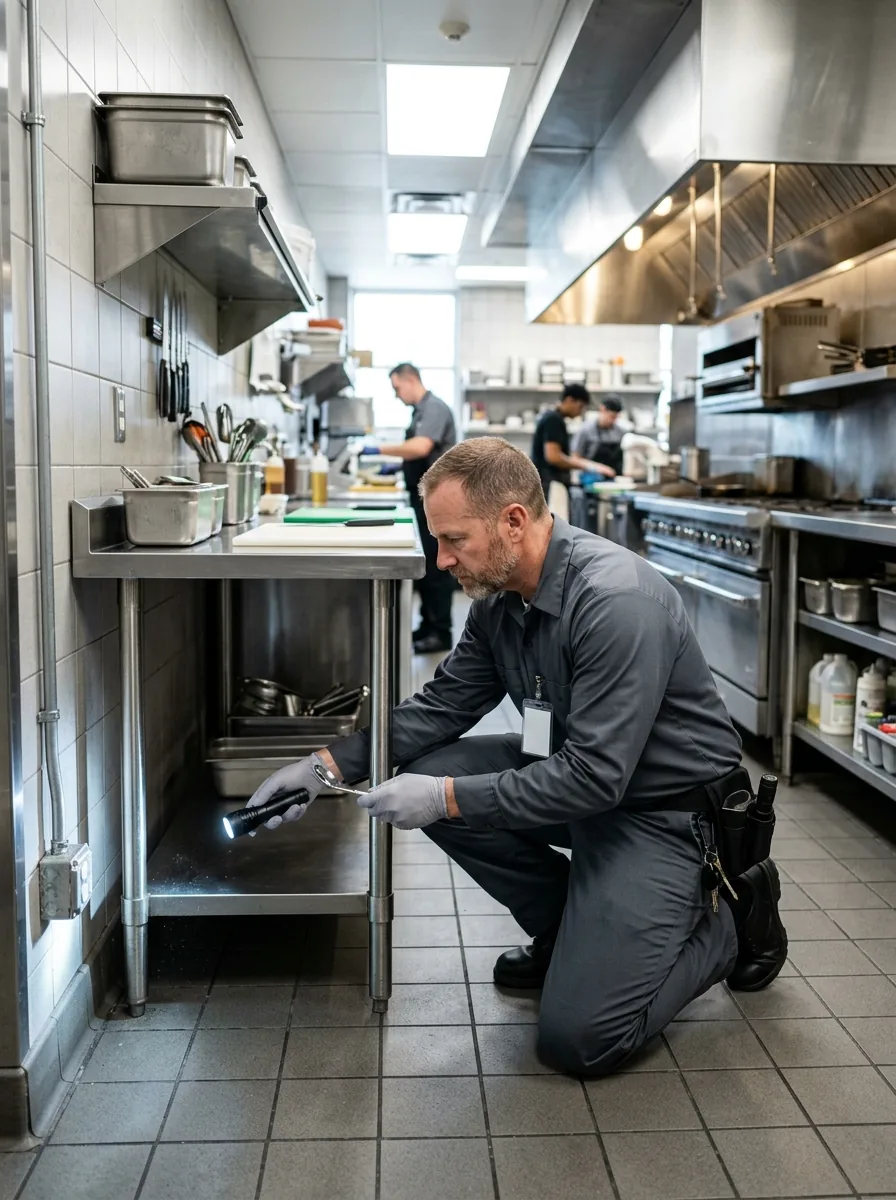
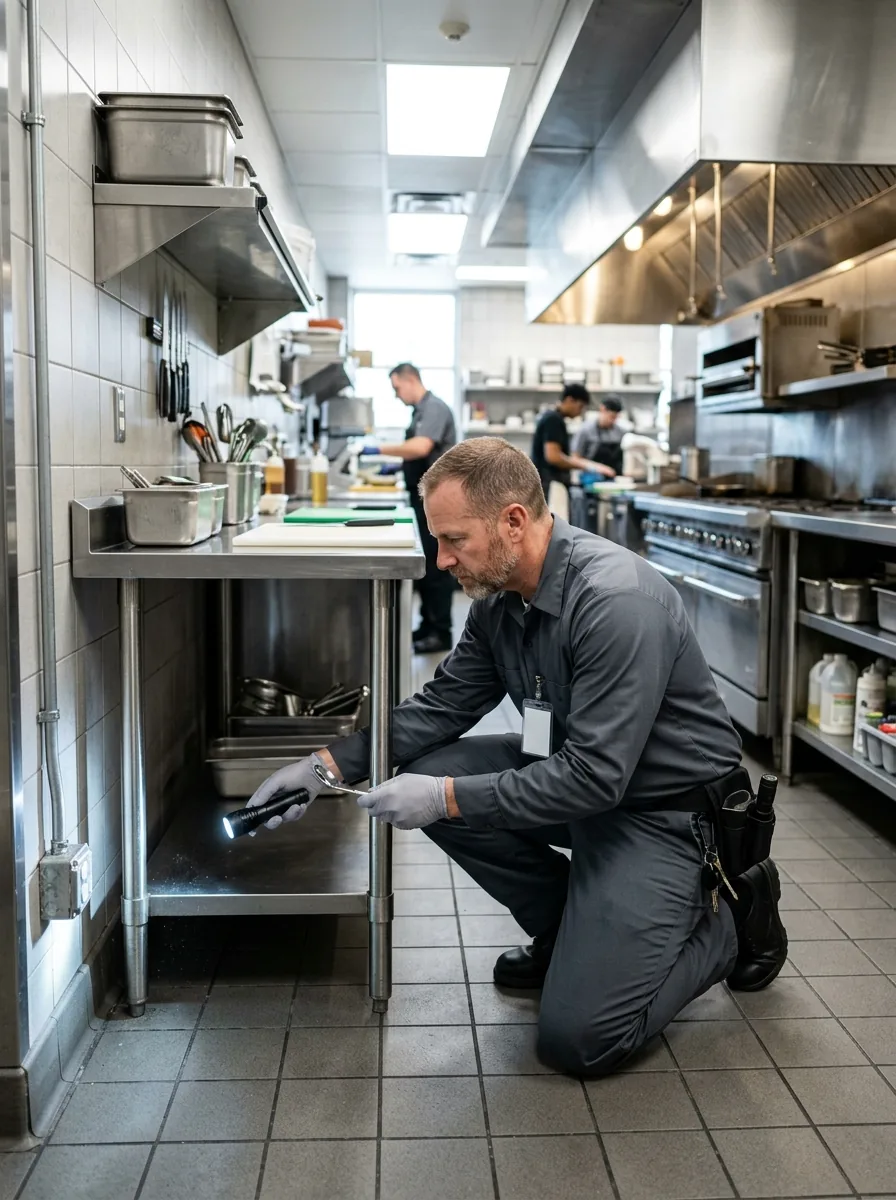
In food businesses the stakes are different again. Flies on a preparation surface are a direct contamination route and an environmental health issue, and an inspector will treat visible fly activity as evidence of a failure somewhere in the system. In those premises the question is never only how to kill the flies present, but what is producing them and what will stop it.
Signs to look for
What you are seeing, and where, is most of the diagnosis:
Why it needs doing properly
Aerosols kill the adults in the air and leave the breeding site producing more. Within days the room looks the same as it did, which is why fly problems are so often described as coming back — the population was never the target.
Finding the source is the skilled part. A blowfly problem may be traced to a dead pigeon behind a soffit; a drain fly problem to a biofilm under a floor gully that looks clean from above; a persistent kitchen problem to residue in a gap beneath equipment that has not been moved in years. None of these are found by treating the room.
In a commercial kitchen there is also a compliance dimension. Records of what was found, what was treated and what was recommended matter when an inspector asks, and so does making sure the treatment used is appropriate for a food environment.

Open 24 hours
Call and describe what you have found. We will tell you what it is likely to be, what the inspection would involve and what happens next. The line is open 24 hours.
Open 24 hours · London and nearby areas
Treatment deals with what is there now. These are the things that reduce the chance of it coming back.
Flats above restaurants and takeaways see fly pressure that has nothing to do with their own housekeeping, and shared waste storage in converted buildings concentrates it further. Older properties with open chimneys and worn soffits are where blowfly problems start, because that is where birds and rodents get in and die. Cluster flies are mainly an issue in properties with large accessible roof voids, which in London means period houses and top-floor conversions.
EVO Pest Control works across London and nearby areas, in homes and in commercial premises, from 1 Fulham Palace Rd, London W6 8AB.
Areas we coverQuestions
If your question is not here, call and ask. It is a quick conversation and it usually saves a visit either way.
07886 109682A sudden emergence of large sluggish flies in one room usually means something has died in a void, chimney or cavity nearby and the blowfly larvae have completed development. The flies stop when the carcass is found and removed, and not reliably before.
Small flies around a sink or floor drain are usually breeding in the organic film inside the drain rather than on anything visible. The surfaces can be genuinely clean while the drain is producing flies continuously.
That is typical cluster fly behaviour. They gather in roof voids to overwinter and become active when the space warms. They are not breeding indoors, so the treatment is aimed at the void and the gaps they are using.
Often both, and the inspection tells you the split. If the source is residue in a drain or under equipment, cleaning it properly is the fix and treatment alone will not hold. Where there is a genuine adult population and ongoing pressure from outside, you need both, plus proofing.
The treatments used in food environments are chosen for that setting, and we will tell you what has been applied, where, and what has to be cleared, covered or kept out of use beforehand.
More services
Not sure what you are dealing with? Start here. An inspection tells you what it is before anything is treated.
Learn more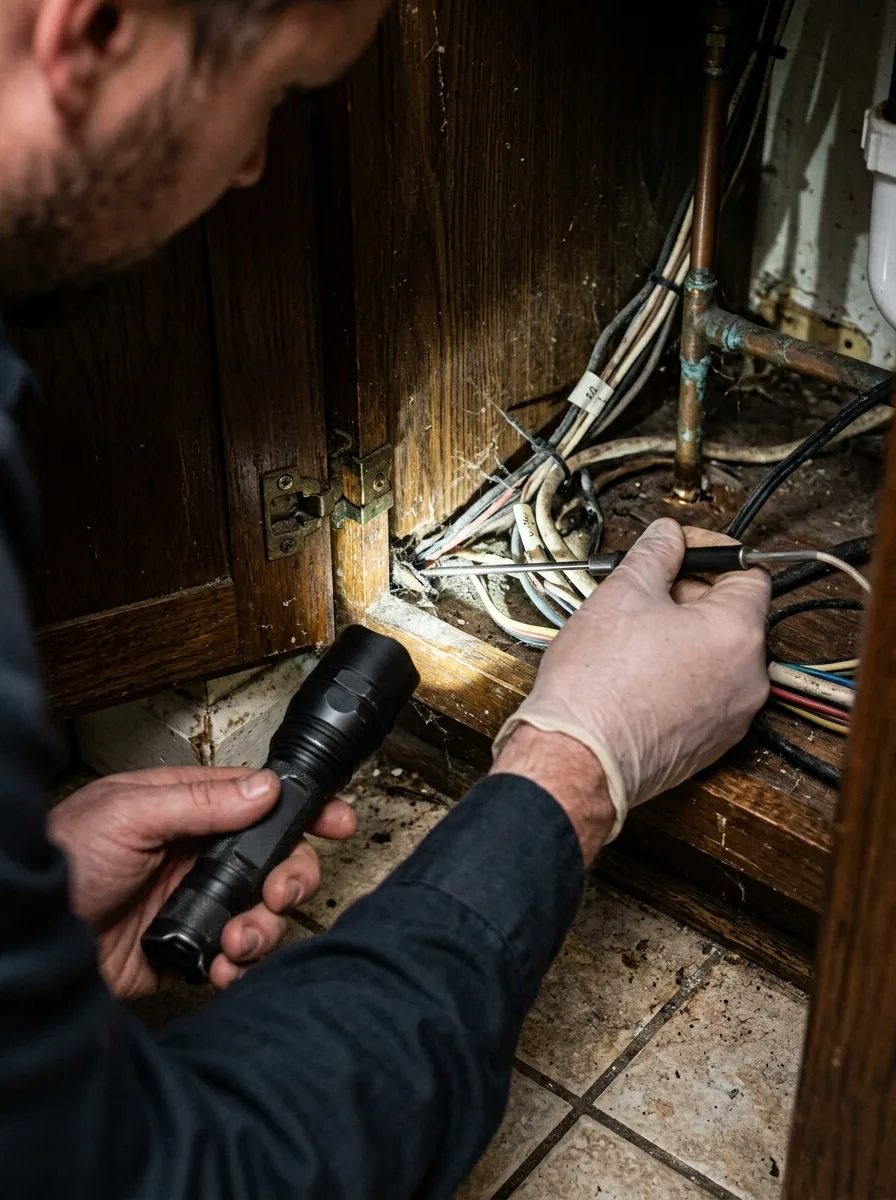
Bed bugs live in seams, joints and fixings within a few feet of where people sleep. Finding them takes a slow, methodical search.
Learn more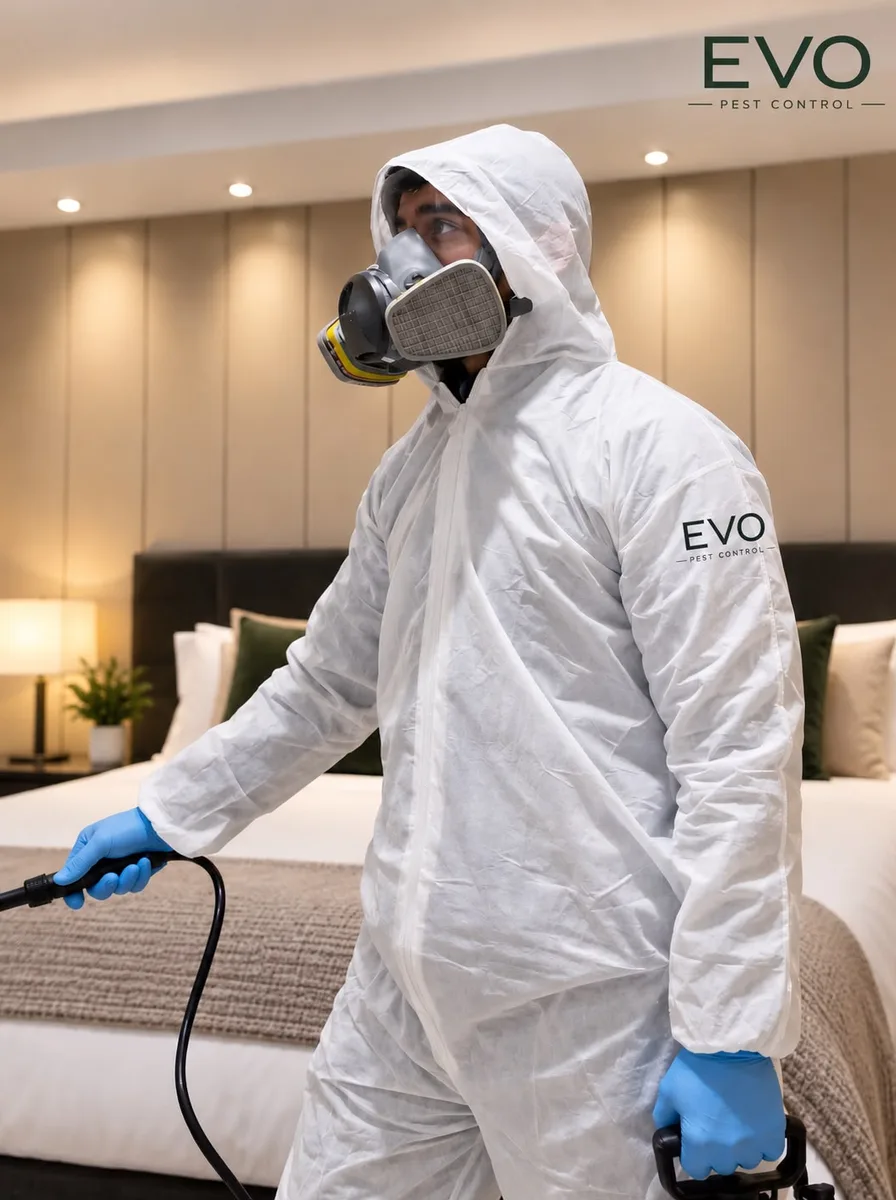
Most of a flea population is in the carpet, not on the pet. Treating the animal alone leaves the rooms untouched.
Learn more