Pest Control
Not sure what you are dealing with? Start here. An inspection tells you what it is before anything is treated.
Learn morePest control services
View all servicesInsects
Rodents
Areas we cover
All areasNot listed?
We cover more than we have pages for.
Tell us the postcode and we will say straight away whether we can reach you.
Call 07886 109682London Pest Control
Rats do not arrive at random. There is a way in and a reason to stay, and dealing with only the rats leaves both of those in place.
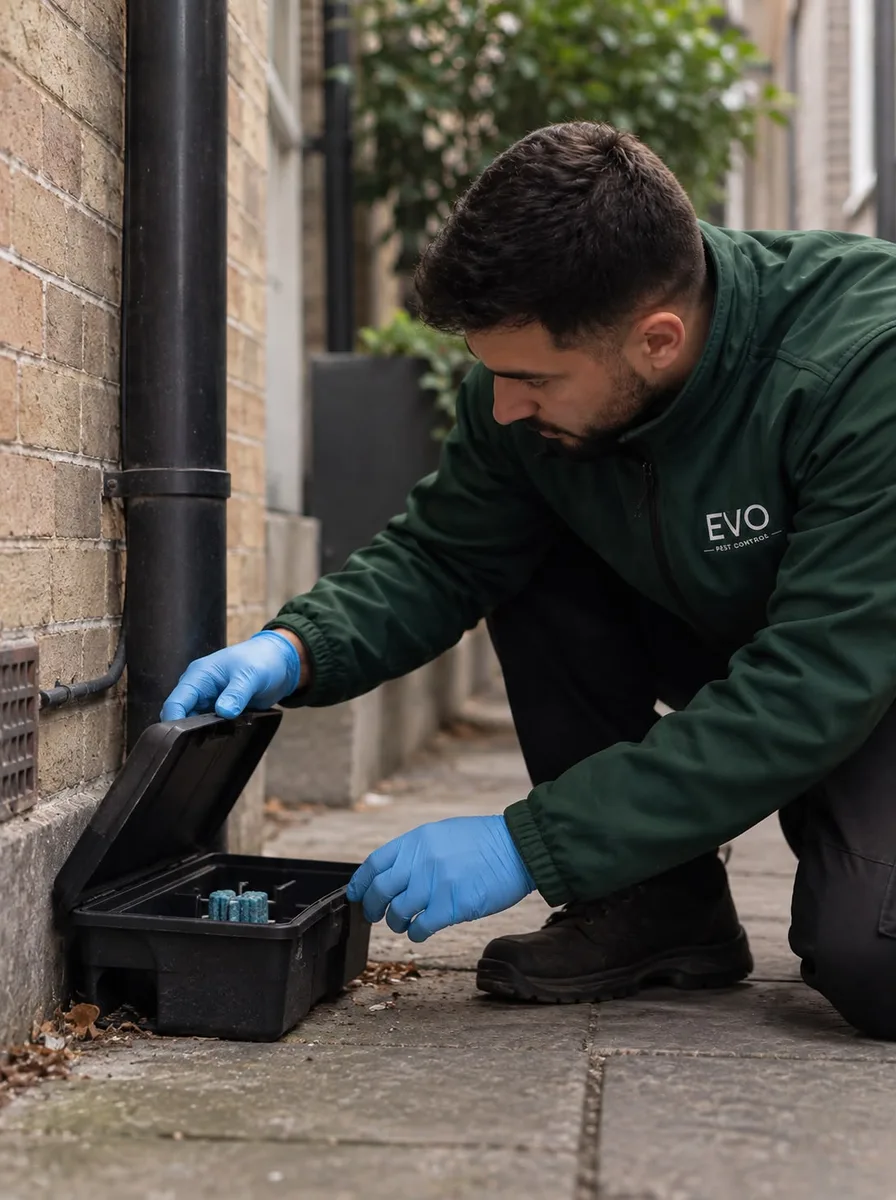
The problem
The brown rat is the species behind almost all rat work in London. It is a capable climber and swimmer, it gnaws persistently, and it can pass through a gap not much wider than its skull. It lives well alongside people because we reliably provide the two things it needs — food and shelter.
In terraced and Victorian housing, the most common route indoors is a defective drain. A cracked or disused underground pipe gives rats a sheltered, undisturbed run directly beneath the building, and from there they surface into voids, under floors and into cavity walls. Other frequent routes are gaps under decking and sheds, open airbricks, holes around incoming services, and unsealed gaps where an extension meets the original building.
Beyond the nuisance, rats gnaw. Damage to cables, pipework and insulation is common and occasionally serious, and their droppings and urine contaminate anything stored where they travel.
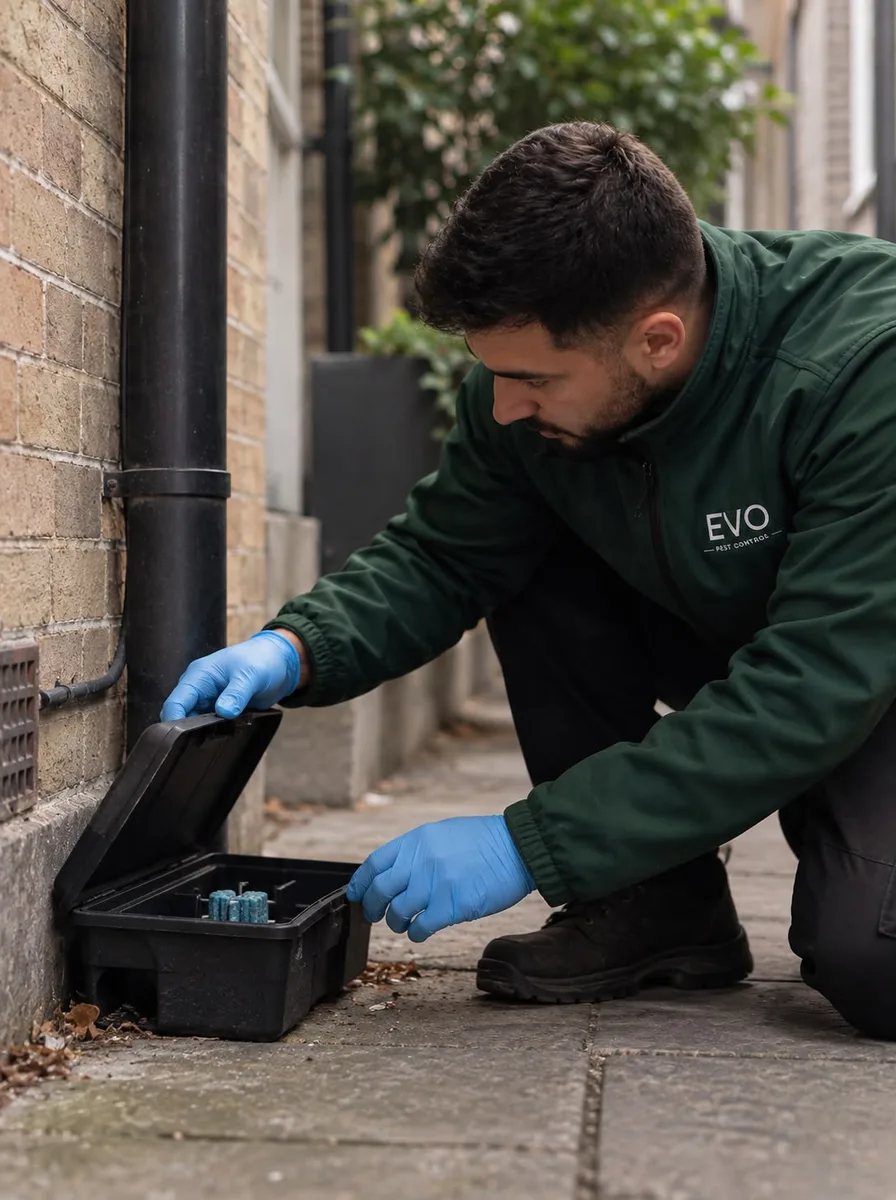
Signs to look for
Rats are heard and traced more often than they are seen. Typical evidence:
Why it needs doing properly
Rat work has two halves, and the treatment is the easier one. Unless the route in is found and closed, a treated property simply gets re-occupied by the next rats using the same route, and the cycle repeats every few months.
Rodenticides also carry real risks around children, pets and wildlife, and are subject to legal restrictions on how and where they may be used. Bait left in the open or in the wrong location is a hazard rather than a solution.
There is also the question of what a burrow or a run is telling you. Activity concentrated near a drain run or an inspection chamber often points to a defect that needs a drainage contractor rather than more bait — and knowing that early saves considerable time and money.

Open 24 hours
Call and describe what you have found. We will tell you what it is likely to be, what the inspection would involve and what happens next. The line is open 24 hours.
Open 24 hours · London and nearby areas
Treatment deals with what is there now. These are the things that reduce the chance of it coming back.
London's terraced streets and Victorian drainage make rat work particularly about the route in. Shared party walls, continuous under-floor voids and ageing underground pipework mean a defect at one address can produce activity two doors down, and a property that has been treated repeatedly without a drainage check is often a property with a broken pipe under it. Where the evidence points that way, we will tell you, rather than keep treating a symptom.
EVO Pest Control works across London and nearby areas, in homes and in commercial premises, from 1 Fulham Palace Rd, London W6 8AB.
Areas we coverQuestions
If your question is not here, call and ask. It is a quick conversation and it usually saves a visit either way.
07886 109682The most common routes are a defective underground drain, an open or broken airbrick, gaps around incoming pipes and cables, and spaces under decking or at the junction of an extension. Rats can pass through a surprisingly small gap, so it is rarely an obvious hole.
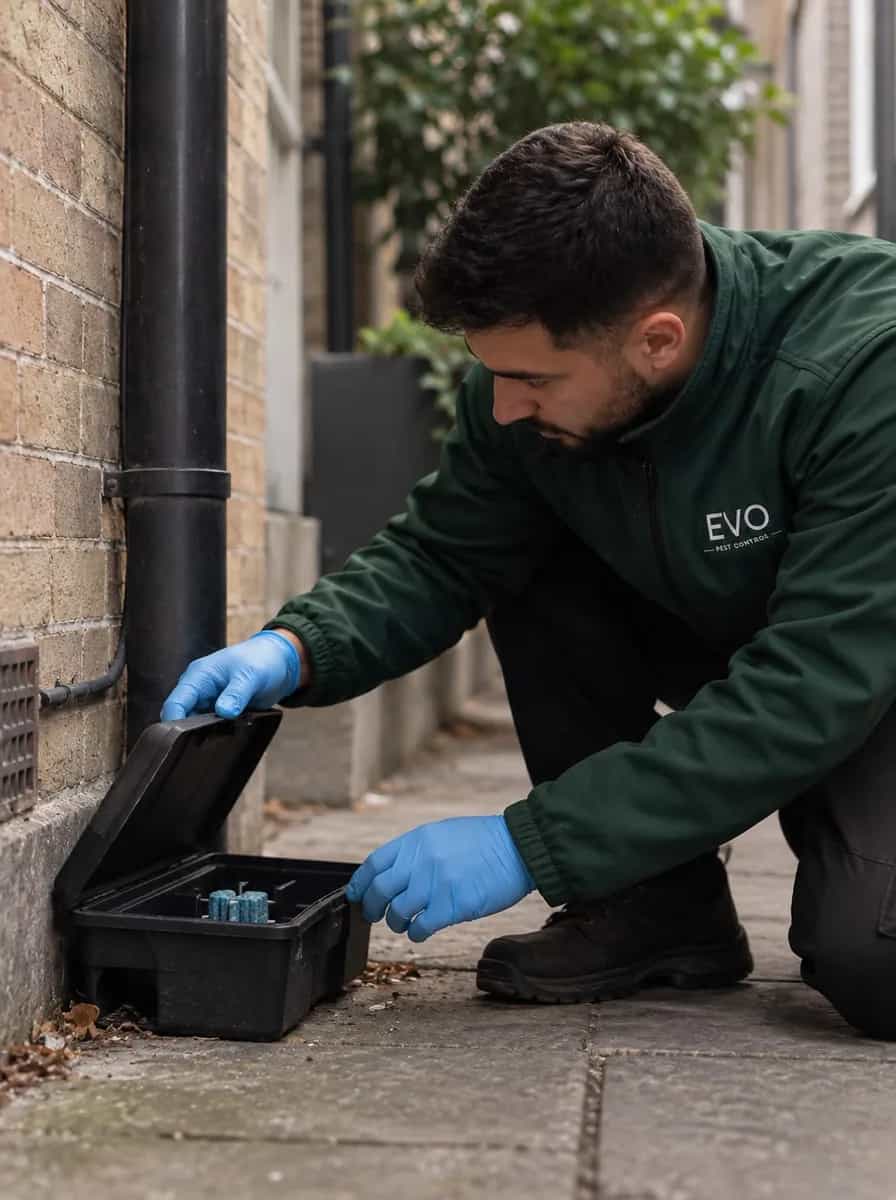
Where rodenticide is used it goes into tamper-resistant stations, placed away from children, pets and wildlife, and recorded so it can be checked and removed. Tell us about pets and children when you call so placement is planned around them from the start.
Almost always because the route in is still open. Treatment removes the rats that are there; it does not stop the next ones using the same way in. If a property has been treated repeatedly, the missing piece is usually proofing or a drainage defect.
The timing is a useful clue. Rats are most active after dark, while squirrels are busiest in daylight, especially early morning. Droppings and gnaw patterns differ too, which is one of the things the inspection settles.
Yes — external burrows are part of the treatment and of the proofing advice, since a garden population is usually where indoor activity is coming from.
More services
Not sure what you are dealing with? Start here. An inspection tells you what it is before anything is treated.
Learn more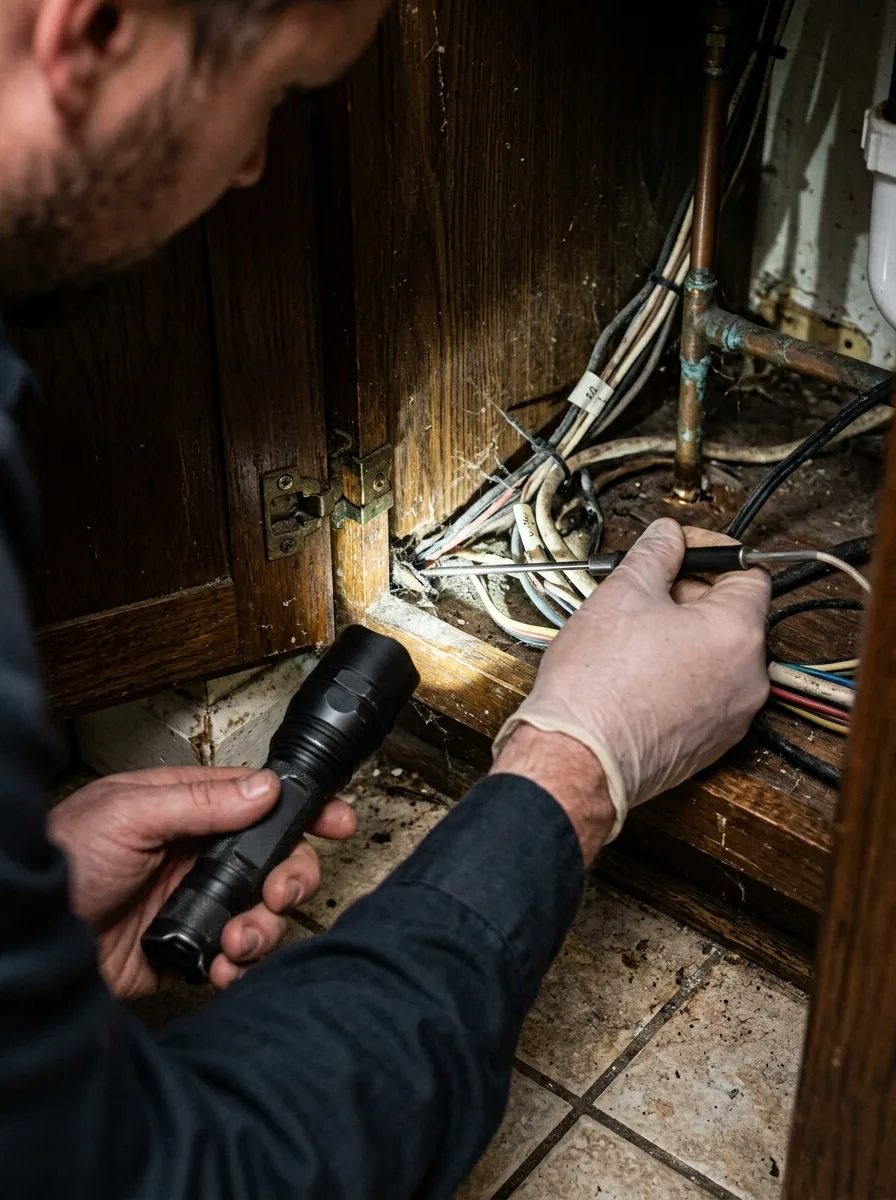
Bed bugs live in seams, joints and fixings within a few feet of where people sleep. Finding them takes a slow, methodical search.
Learn more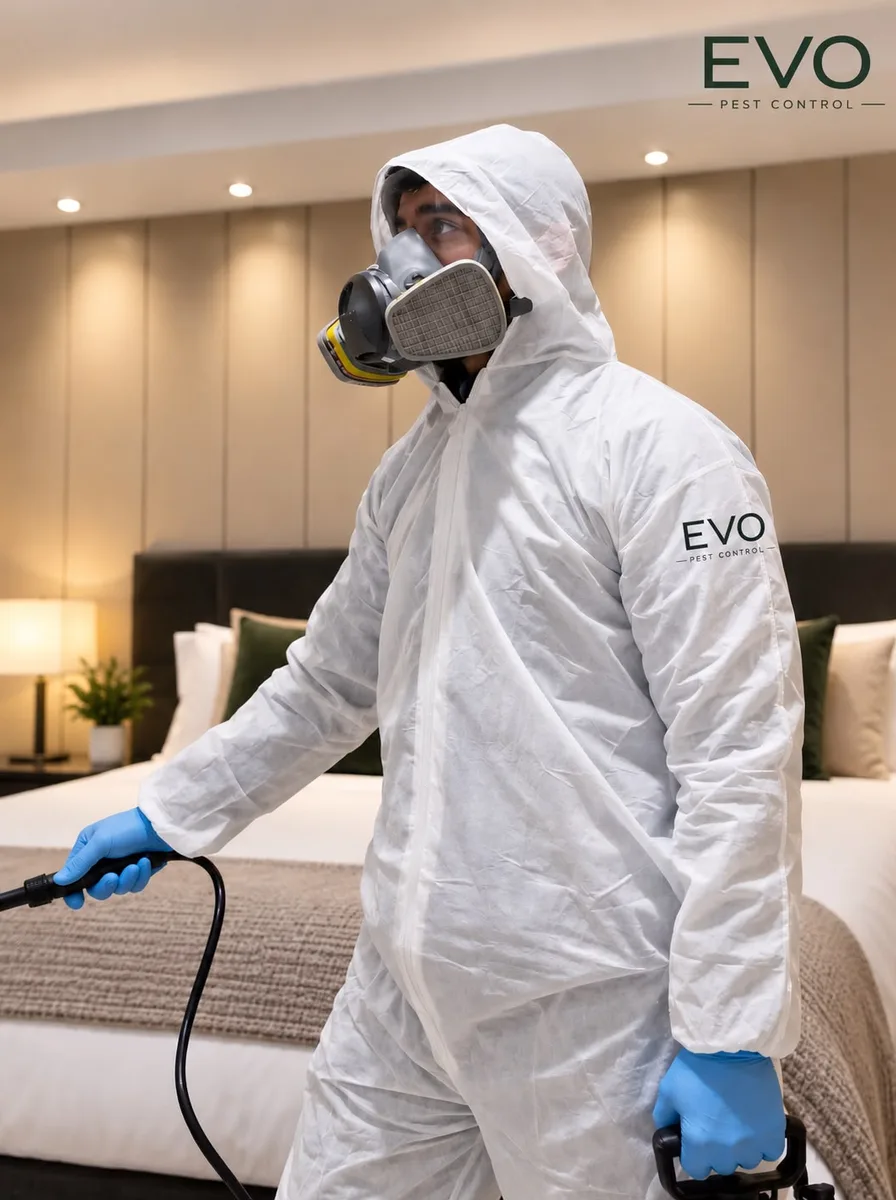
Most of a flea population is in the carpet, not on the pet. Treating the animal alone leaves the rooms untouched.
Learn more