

Pest Control
Not sure what you are dealing with? Start here. An inspection tells you what it is before anything is treated.
Learn morePest control services
View all servicesInsects
Rodents
Areas we cover
All areasNot listed?
We cover more than we have pages for.
Tell us the postcode and we will say straight away whether we can reach you.
Call 07886 109682London Pest Control
Mice nest inside the structure rather than outside it, which is why the same cupboard keeps producing droppings. Closing the gaps is most of the work.
The problem
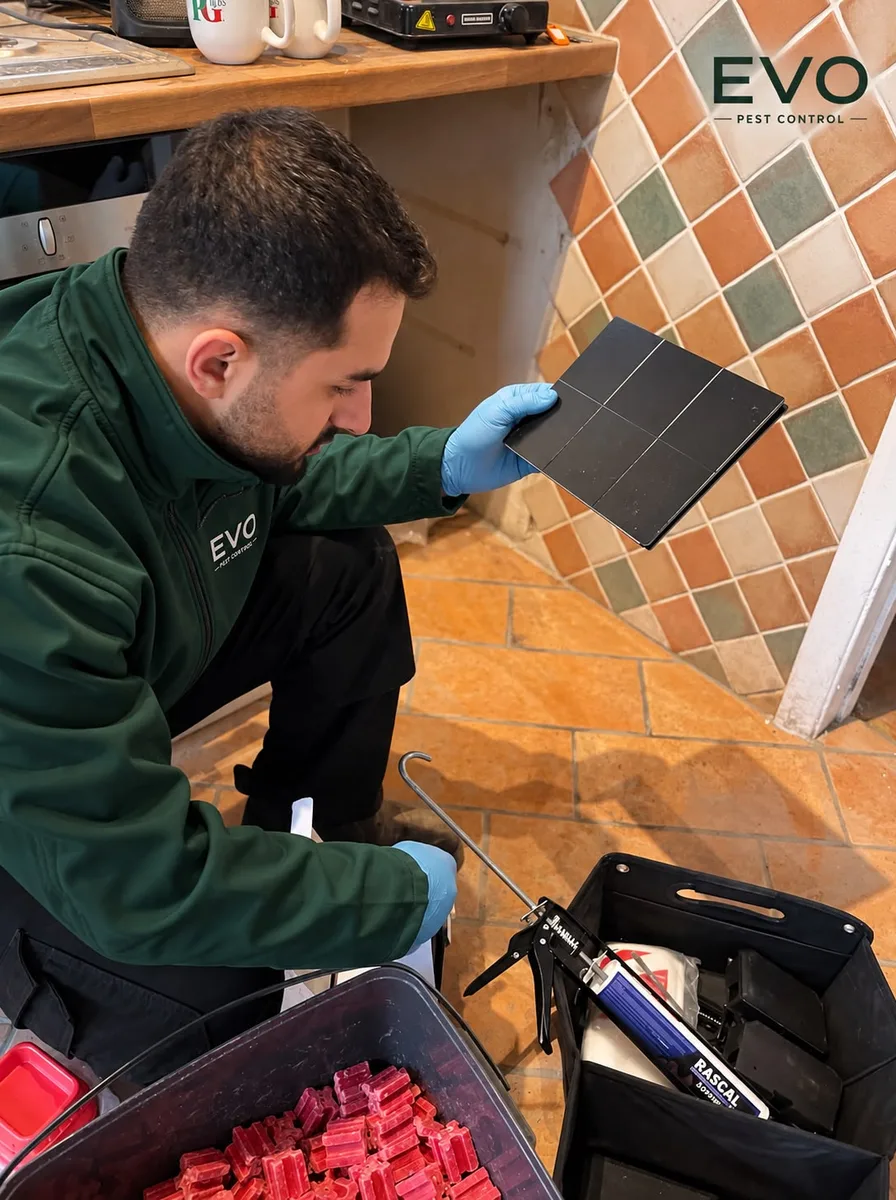
The house mouse differs from the rat in a way that changes the whole approach: it does not need to commute. A mouse will nest inside the building — in a wall void, under kitchen units, behind a boiler, in loft insulation, in the back of a rarely-opened cupboard — and live its entire life within a small radius of that nest.
It also needs very little. A mouse can squeeze through a gap around 6mm wide, gets most of its water from food, and nibbles at many places rather than feeding in one, which is why droppings turn up scattered along a route rather than concentrated in a heap. Small quantities of crumbs, pet food or birdseed are enough to sustain a population.
They breed quickly, and they gnaw as a matter of course — including on cable insulation, which is the reason mouse activity around consumer units and appliances is worth dealing with promptly rather than tolerating.
Signs to look for
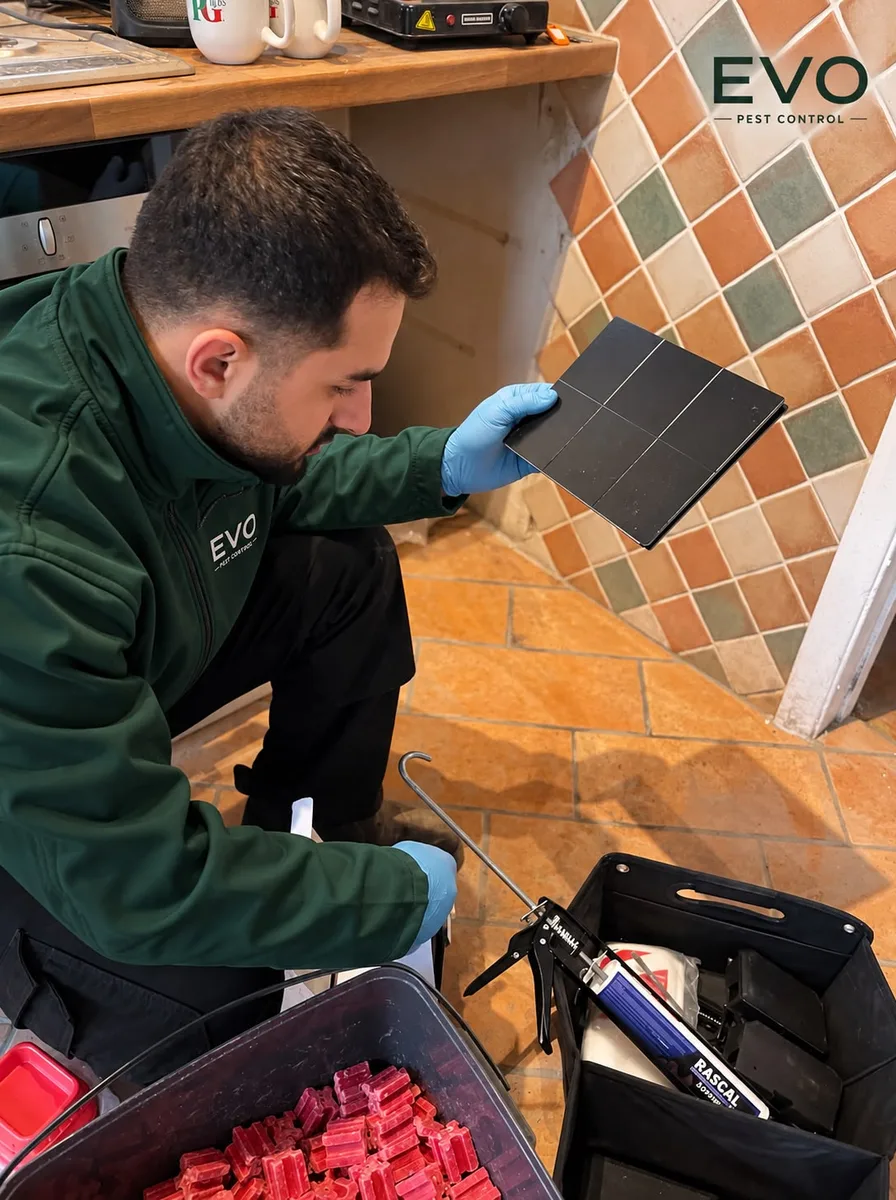
Mouse evidence is small and scattered. The usual indicators:
Why it needs doing properly
A couple of traps under the sink deals with the mice that find them and leaves the nest, the rest of the population and every gap they are using exactly as before. Mice reproduce fast enough that this rarely gets ahead of the problem.
The harder part is proofing. Mice use gaps that are easy to walk past: the hole where a pipe enters under a unit, a gap behind a kickboard, an unsealed service entry, the space around a soil pipe, a worn door sweep. Finding those and closing them properly is what turns a treatment into a result.
In flats and shared buildings, mice move between units through risers and wall voids, so a single-flat approach often will not hold. That is worth knowing before you spend months on it.

Open 24 hours
Call and describe what you have found. We will tell you what it is likely to be, what the inspection would involve and what happens next. The line is open 24 hours.
Open 24 hours · London and nearby areas
Treatment deals with what is there now. These are the things that reduce the chance of it coming back.
Mice are one of the most common pests in London flats, and the reason is usually the building rather than the flat. Converted houses and purpose-built blocks are full of continuous voids, shared risers and service penetrations that let mice move freely between units, so treating one flat while the neighbouring void stays open tends to produce a short quiet spell and then a return. Where the inspection points that way, we will tell you what needs raising with the building.
EVO Pest Control works across London and nearby areas, in homes and in commercial premises, from 1 Fulham Palace Rd, London W6 8AB.
Areas we coverQuestions
If your question is not here, call and ask. It is a quick conversation and it usually saves a visit either way.
07886 109682Roughly 6mm — about the width of a pencil. That is why proofing is so much fussier than it sounds, and why the gaps that matter are usually ones people have walked past for years.
They contaminate food and surfaces with droppings and urine, and they gnaw persistently, including on cable insulation. That combination is the reason to deal with them promptly rather than tolerate a low level of activity.
Mice are largely nocturnal and stay close to cover, so droppings, smears and nesting material are usually the only evidence you will find. That evidence is more useful than a sighting anyway, because it maps the route.
Yes, and in converted buildings they often do, travelling through shared risers and wall voids. If the inspection suggests that is what is happening, treating your flat alone is unlikely to hold and we will say so.
Proofing is part of how we approach mouse work, because treatment on its own tends to be temporary. We will identify the gaps during the inspection and tell you which are within scope and which need a builder.
More services
Not sure what you are dealing with? Start here. An inspection tells you what it is before anything is treated.
Learn more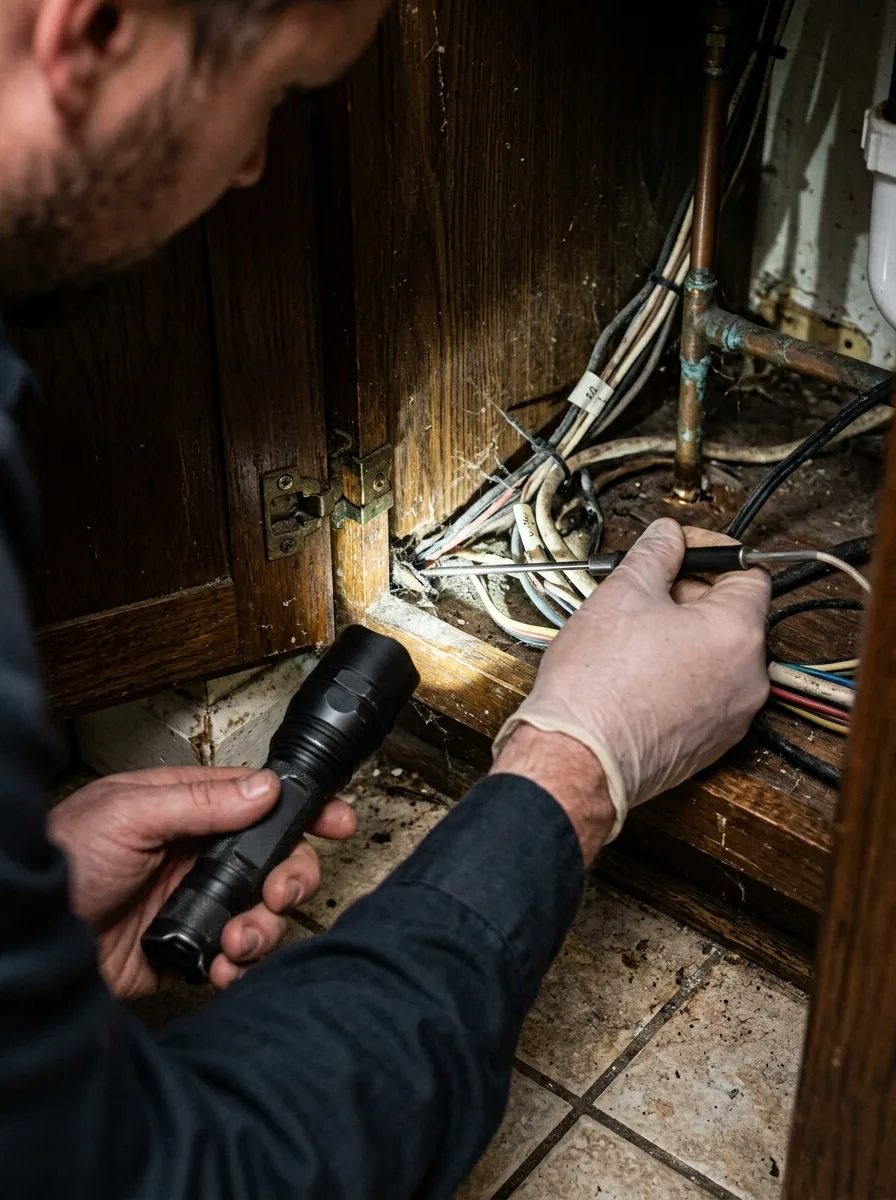
Bed bugs live in seams, joints and fixings within a few feet of where people sleep. Finding them takes a slow, methodical search.
Learn more
Most of a flea population is in the carpet, not on the pet. Treating the animal alone leaves the rooms untouched.
Learn more