


Pest Control
Not sure what you are dealing with? Start here. An inspection tells you what it is before anything is treated.
Learn morePest control services
View all servicesInsects
Rodents
Areas we cover
All areasNot listed?
We cover more than we have pages for.
Tell us the postcode and we will say straight away whether we can reach you.
Call 07886 109682London Pest Control
A wasp nest is usually straightforward to treat and genuinely risky to disturb. The judgement is in how it is reached, not what is applied.
The problem
A wasp nest starts in spring as something the size of a golf ball, built by a single queen. Through the summer it grows into a papery structure that can hold thousands of workers by August and September — which is exactly when most calls come in, because that is when the colony is largest and the workers are most defensive.
In London houses the nest is most often in a loft, in a soffit or fascia void, behind a bargeboard, inside a cavity wall reached through an airbrick, under roof tiles or in a shed or garage. Sometimes it is in the ground, in a bank or an old burrow. The steady stream of wasps entering and leaving one fixed point is the giveaway.
Wasps defend the nest. Unlike a bee, a wasp can sting repeatedly, and a disturbed nest can produce a mass response. For anyone with a known sting allergy, or where a nest is beside a door, a bedroom window or a play area, it is not something to experiment with.
Signs to look for
What points to an active nest rather than passing wasps:
Why it needs doing properly
Almost every serious wasp incident starts with someone approaching a nest without the right protection, or treating it from a ladder. A disturbed colony responds in numbers, and a sting reaction on a ladder is a fall as well as a sting.
Blocking the entrance is a common instinct and a poor idea — the colony usually finds another way out, and in a cavity wall or roof void that new route can end up inside the building rather than outside it.
A shop-bought aerosol also tends to reach only the wasps at the entrance rather than the nest itself, which leaves the colony intact and considerably more defensive than it was.
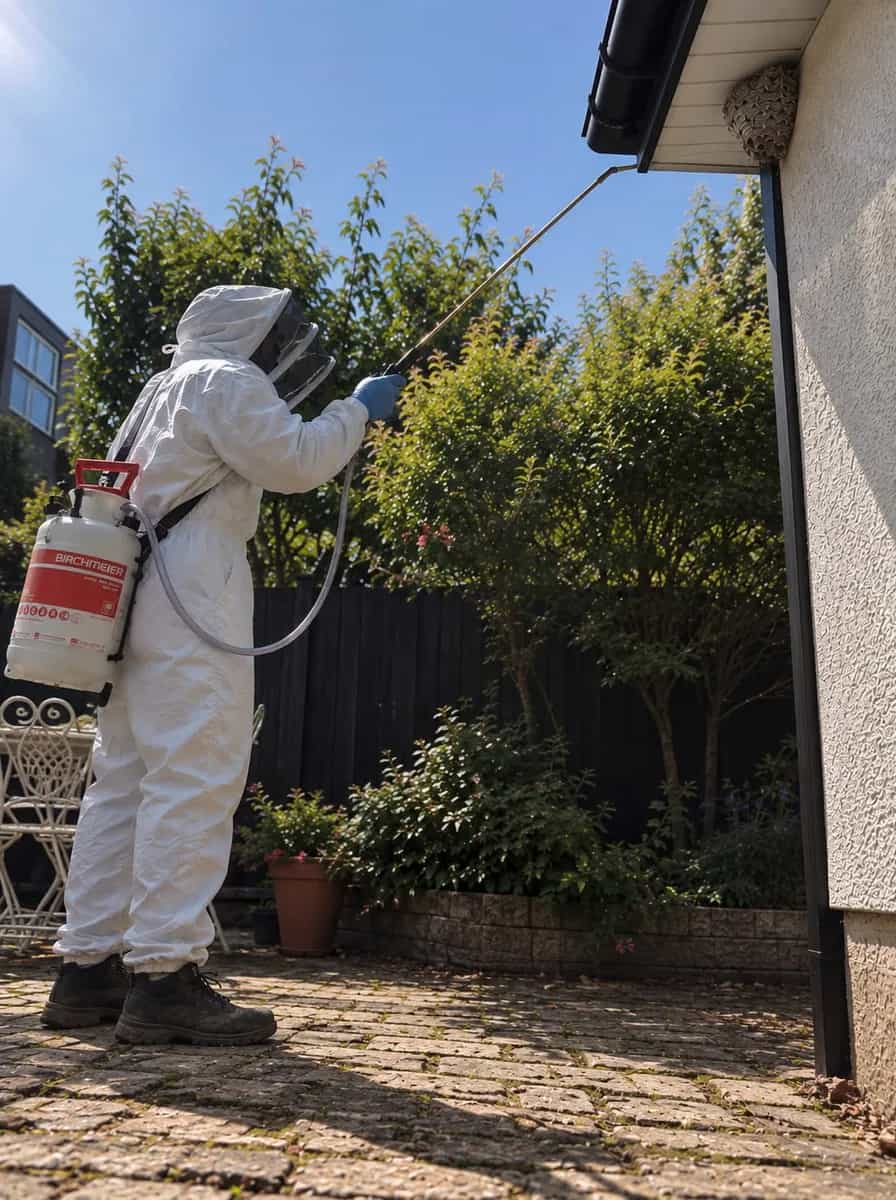
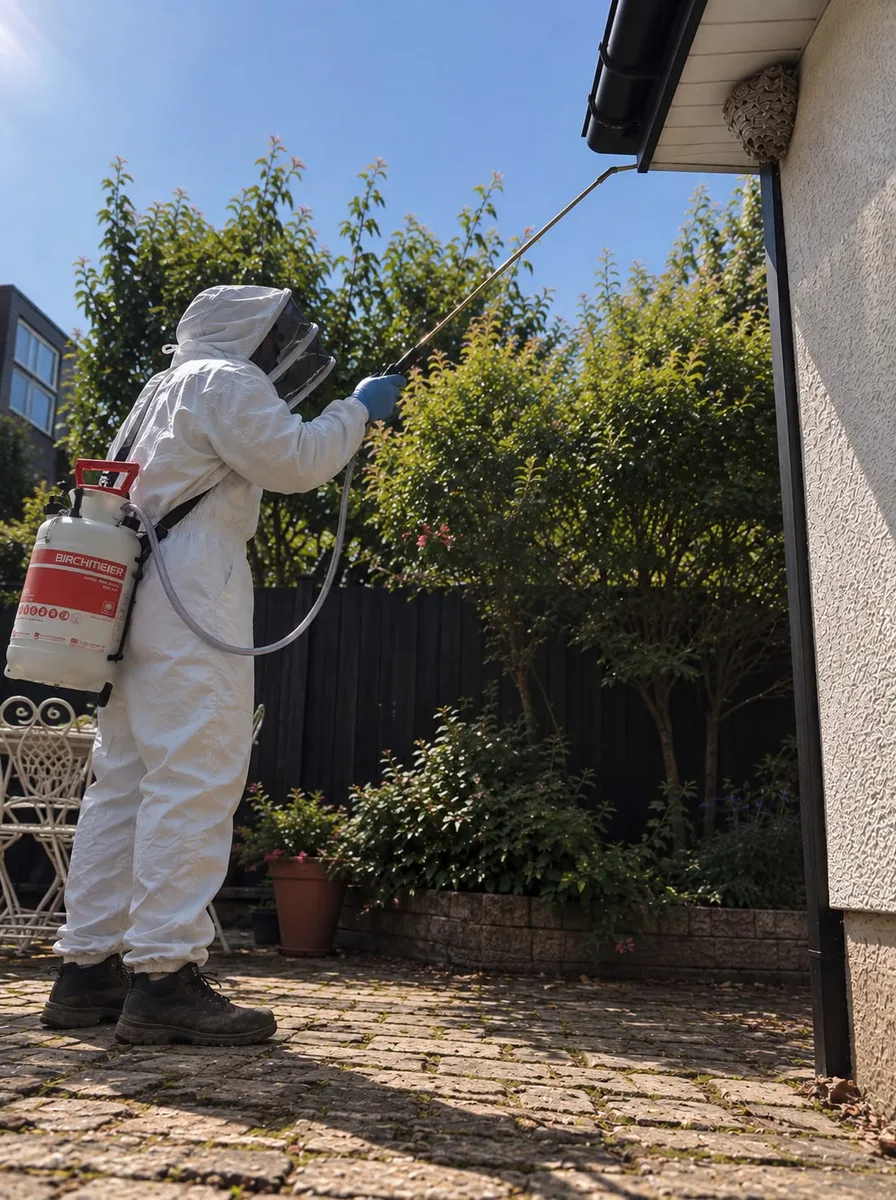
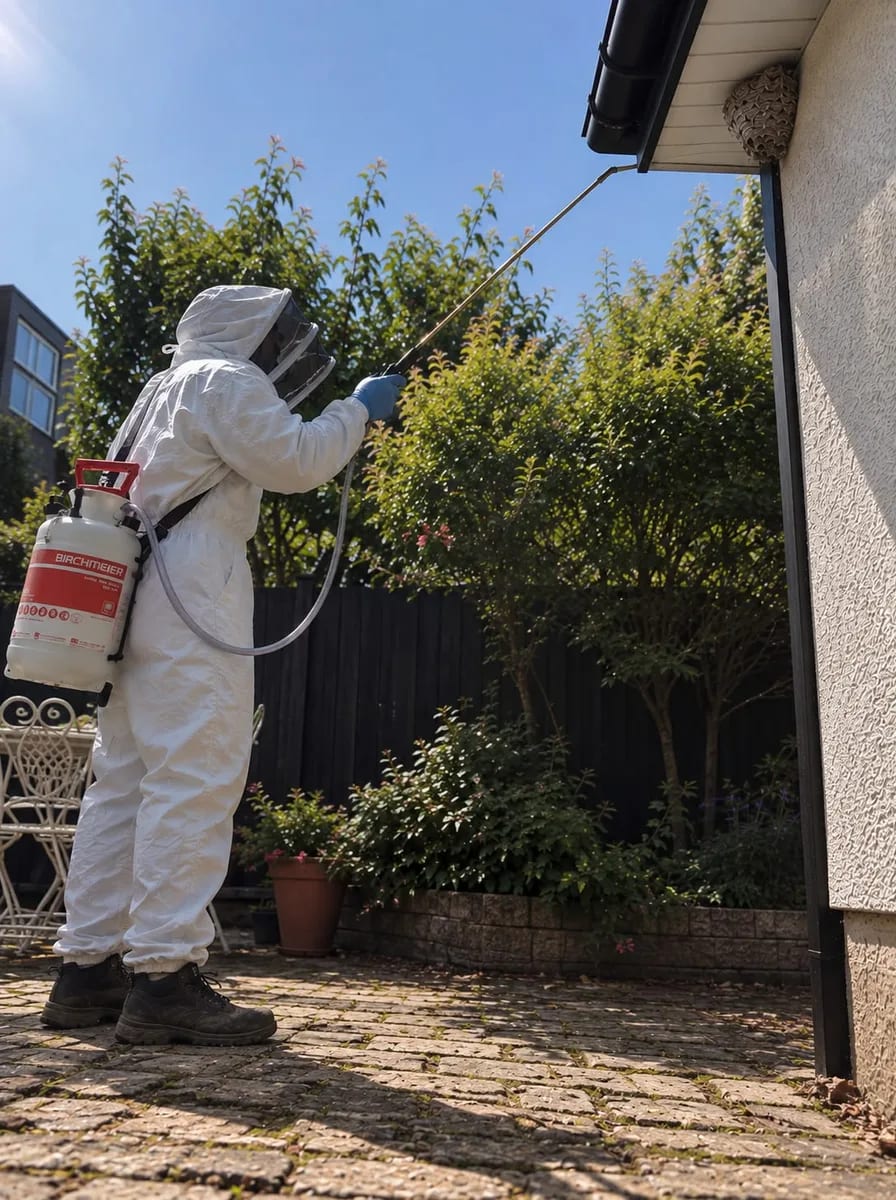
A professional treatment is applied at the nest entrance in protective equipment, so returning foragers carry it in and the colony is dealt with properly.

Open 24 hours
Call and describe what you have found. We will tell you what it is likely to be, what the inspection would involve and what happens next. The line is open 24 hours.
Open 24 hours · London and nearby areas
Treatment deals with what is there now. These are the things that reduce the chance of it coming back.
Loft conversions and older roofs across London give wasps plenty of options — soffit voids, gaps behind fascias, open airbricks and the junctions where an extension meets the original roofline. Terraced rows also mean a nest under one set of eaves is often close to a neighbour's bedroom window, so access and timing get discussed alongside the treatment itself.
EVO Pest Control works across London and nearby areas, in homes and in commercial premises, from 1 Fulham Palace Rd, London W6 8AB.
Areas we coverQuestions
If your question is not here, call and ask. It is a quick conversation and it usually saves a visit either way.
07886 109682A wasp nest is grey and papery, built in layers, usually in a void or cavity. Honeybees build waxy comb and a swarm looks like a dense hanging cluster. It matters, because bees are treated very differently — see our bee control page.
Please do not. A blocked colony tends to find another route, and in a cavity wall or roof void the new exit can come out inside the building. It also makes the remaining wasps considerably more defensive.
No — a nest is used for a single season and is not re-occupied. But the same sheltered spot often attracts a new queen the following spring, which is why proofing the gap is worth doing.
By August the colony is at its largest and the workers switch from hunting insects to seeking sugar, which brings them to bins, fallen fruit and outdoor food. They are also more aggressive at that point in the season.
Tell us when you call. It changes how we plan access and timing, and what we ask you to do during and immediately after the treatment. Keep everyone well away from the nest in the meantime.
More services
Not sure what you are dealing with? Start here. An inspection tells you what it is before anything is treated.
Learn more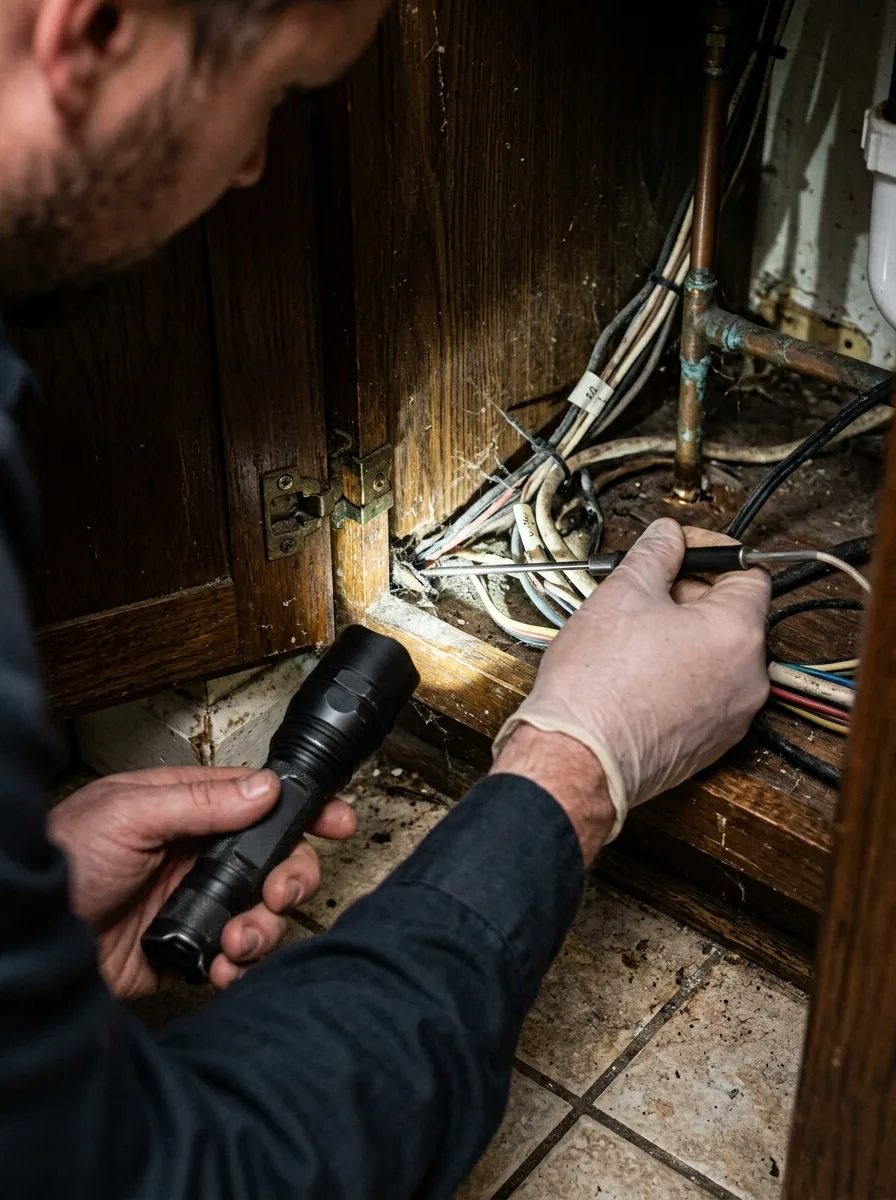
Bed bugs live in seams, joints and fixings within a few feet of where people sleep. Finding them takes a slow, methodical search.
Learn more
Most of a flea population is in the carpet, not on the pet. Treating the animal alone leaves the rooms untouched.
Learn more