


W1, WC1, WC2, EC1 to EC4 and SE1 · Open 24 hours
Mouse control in central London
Shared risers, ducting and service corridors let mice range across an entire commercial building in the centre, which is why one tenant's problem is so often everyone's.

Local detail
Mice in Central London
Central London buildings are deeply interconnected: shared basements, service corridors, riser cupboards, ducting and communal waste areas link separate businesses into a single environment as far as mice are concerned. An office's mouse problem can trace straight back to the kitchen below it or the storage unit next door.
Warehousing and storage bring their own pattern — large volumes of stored goods, pallets and cardboard mean both harbourage and a route of introduction, since a mouse population can arrive in a consignment rather than developing on site.
Signs to look for
Signs of mice in Central London
What we are usually shown across the centre:
- Droppings or gnawed packaging in a shared riser, duct or service corridor
- Activity in an office or retail unit traced back to a kitchen or storage area elsewhere in the building
- Nesting material found in stored goods or pallets at a warehouse
- A mouse problem reported by more than one tenant in the same multi-tenant building
Our approach to mice in Central London
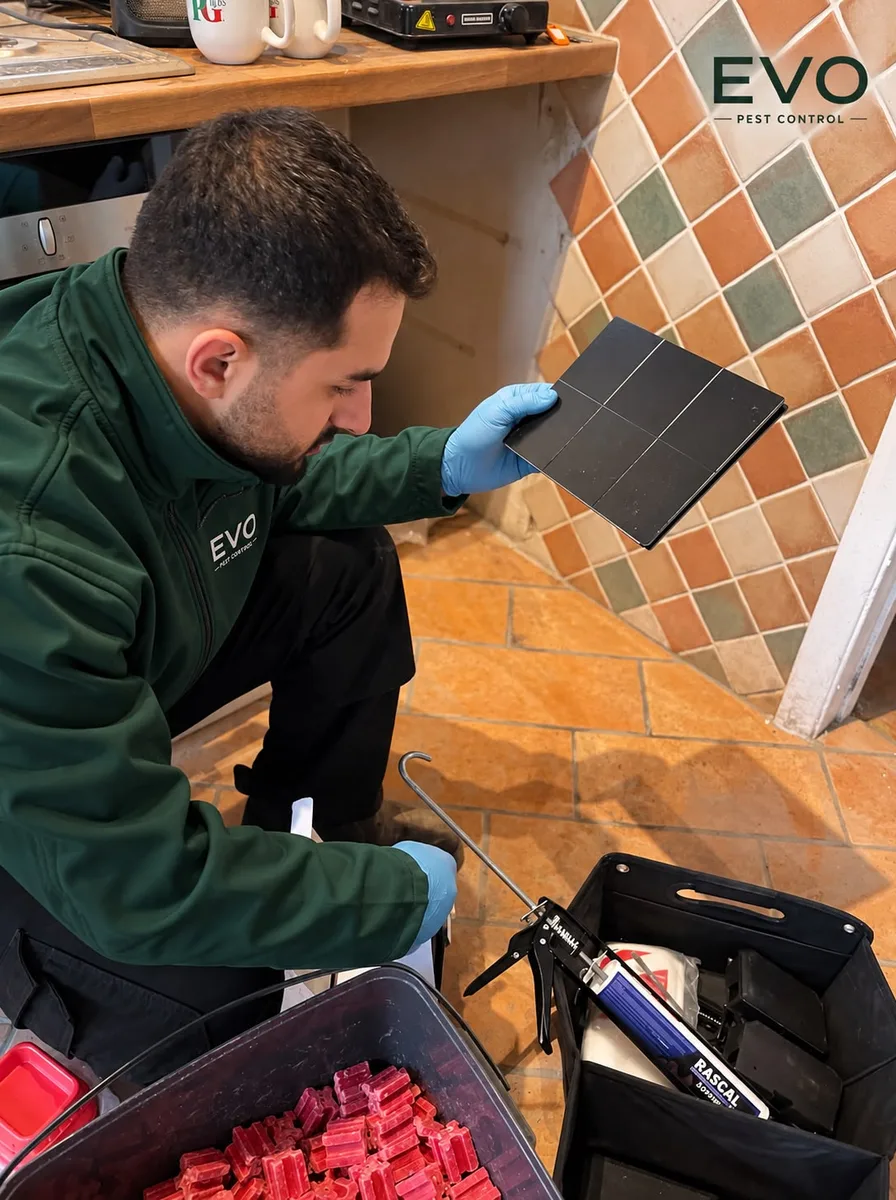
In multi-tenant buildings the shared basement, risers and ducting are inspected alongside the unit itself, and findings are documented for environmental health and audit purposes — the full detail on how we treat and proof against mice is on our mouse control guide.
Read the full mice guide
Open 24 hours
Mice problem in Central London? Talk it through with us.
Call and describe what you have found and where. We will tell you what it is likely to be, what the inspection would involve and what happens next. The line is open 24 hours.
Open 24 hours · London and nearby areas
More like this
More on mice and pest control in Central London
Mice in other areas
Other pests we treat in Central London
Questions
Mice in Central London — common questions
If your question is not here, call and ask. It is a quick conversation and it usually saves a visit either way.
07886 109682Yes. An inspection ahead of a visit identifies what an officer would find, what can be resolved immediately and what needs a longer fix, and gives you a documented account of the work.
We inspect what we have access to and document where the activity is coming from. Shared areas normally need the building manager or freeholder to act, and a clear written finding is what usually prompts that.
Yes. Storage sites need a different emphasis — harbourage in stored goods and pallets, proofing at loading bays, and checking whether the problem arrived in a consignment rather than developing on site.